Showing posts with label Poland. Show all posts

Saturday, August 9, 2025

My Polish Alphabet: "S" for Seagulls

 Today, a more down to earth-type topic.

When we came back to Poland  and were staying at my “old” place,  one thing surprised me then – I heard some weird noise outside the window -  again and again. I could hear it even when the windows were closed. To my astonishment,  I realized it was the sound of the seagulls flying around the house. What was strange about that?


The thing is, when I had used to live there, for all those decades,  I hardly noticed the sound those birds made. Obviously, I was aware of the constant presence of those birds in our area, however, I did not hear them that often.  My mind simply learned to not pay attention to that noise.  All in all, at that time, I  tended to notice the seagulls’ calls more often, when I happened to be closer to the sea. 

It reminded me the summer, when my aunt once visited.  I was little then. The lady complained then that she could not sleep in the night. The sound of the trolleybuses going along the street near our house kept her awake. Well, it did not bother us at all. Being used to the trolleybuses, we did not pay attention to the sound they made. Anyhow, strange how the human mind works.

Well, no seagulls where I live now (and no trolleybuses either). 

Another “S” is for seagulls in “My Polish Alphabet”.

Seagulls at the Sopot pier, in Poland

---

"My Polish Alphabet" is about things, places, and people that come to my mind when I think about Poland.


Wednesday, May 8, 2024

My Polish Alphabet - "N"


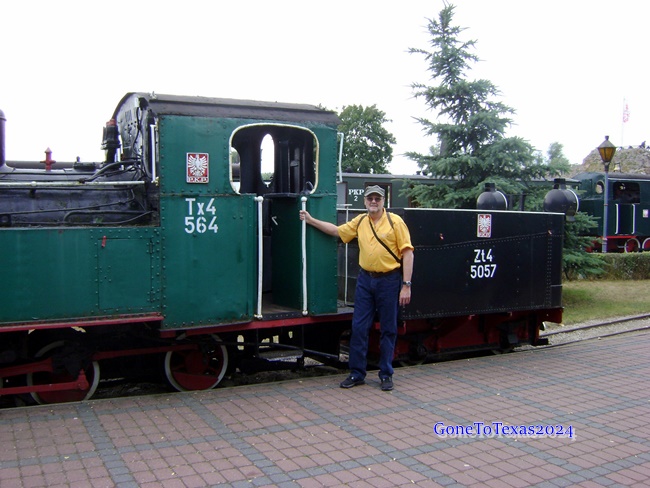
"N" is for the Narrow Gauge Railway Museum in Wenecja, which we visited some years ago. 


Wenecja means Venice in Polish

 
The railway track (600 mm wide = 1 ft 11 5/8 inch.) was built to connect three local towns, nowadays it is just a tourist attraction. 
 

Unfortunately, on the day of our visit, the railway line was under maintenance, so we could not enjoy the ride on a small train, but I had had a chance to experience it in the past.


There is not much space to seat on the narrow gauge trains and the seats are rather narrow.  Carts and the engines are smaller too.


The museum collection consists of several steam locomotives. The oldest one was made in 1899, and others in the early 1900s.


Post office cart

The locomotive in the above photo was made in Hannover in 1923.

There is also the old station-waiting room and ticket office.


From the museum area, you can also see the ruins of the castle in Wenecja (the structure was built in the 14th century). 

 A good place to visit with the family as well.


Monday, February 19, 2024

O for ORP Orzeł


I mean the Polish submarine "Orzeł" ("Eagle") that was built in 1936/commissioned in 1939 and proudly served in the Polish Navy during WWII. My Grandma's cousin was one of the crew members on the vessel. Unfortunately, my Mom cannot recall his name.


In June 1940, the submarine did not return to its base. The circumstances of its disappearance are not clear. Probably, it was hit by a sea mine, or struck by an aircraft. Anyhow, "Orzeł" was lost at sea, and all its crew perished.

After WWII, several expeditions were organized to find the submarine or its remains. 
 
 
I think it will be found. I had a dream in which I attended an event celebrating the find. A local women's choir sang there. The women were wearing long dresses with long aprons on them. I could hear a man's voice announcing that the pieces of the submarine were found 300/400 meters under the sea surface level, near the defensive ramparts of Finland. The vessel was buried in a hole in the sea bottom, covered by sand. The announcement was not in Polish, though. I am not sure why.


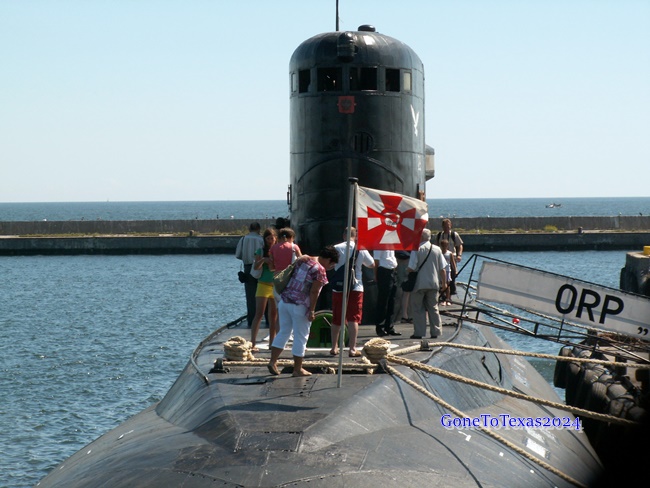
The submarine you can see in the photos was built in Riga in 1986. It is the third "Orzeł" submarine that has served in the Polish Navy. 
 
 
The photographs were taken during the send-off event celebrating another ORP "Orzeł" search expedition (Balexmetal 2008).
 
Inside the expedition ship


Research equipment
---

"My Polish Alphabet" is a posts series related to things, places, and people that come to my mind when I think about Poland.

Tuesday, January 30, 2024

I for Insurgent and U for Uprising


As for the Insurgent - I mean the monument to the Little Insurgent dedicated to the children who fought in the Warsaw Uprising that took place in 1944.

To make the story short - the young and younger citizens of Warsaw, then occupied by Nazis, organized an armed action against the occupants. 

The monument to the Warsaw Uprising/Warsaw Insurgents

Since at that time, the Russian Army was stationed on the other bank of the Vistula River, the young Insurgents believed the Russians would support their fight and help them liberate the city. 


The uprising started on 1 August and lasted for 63 days, the Russian Army did not take any action and did not support the Insurgents. Sadly, the Warsaw WWII revolt brought tragic results. 


During the fights, about 200,000 citizens of Warsaw lost their lives. In the aftermath, Nazi planes destroyed/flattened the city, and its 700,000 inhabitants were expelled from Warsaw.


More info about the Warsaw Uprising

Available on YouTube:

Available on Tubi:

On a cool July day (the temperatures in the 60s), we thought about it all while visiting Warsaw and watching the monuments.


The letter P with an anchor at its bottom was the symbol of the WWII Polish Underground State and the Home Army. The anchor = letter W. Both P make W (in Polish) are the acronym meaning "fighting Poland". It was also the symbol of the Warsaw Uprising.

Glory to the fallen Heroes!

Tuesday, October 31, 2023

H for Hel and Hel Peninsula

H is for Hel and Hel Peninsula (in "My Polish Alphabet"). They are situated in the very north of Poland. 

(1)

Hel used to be a fisherman's village. These days, especially in the summer, the place is popular with tourists, amateurs of fresh fish, and sunbathing on the sandy beaches facing the open Baltic Sea.
During storms, the peninsula is often severely flooded by the sea waters, which temporarily turn it into an island.  

headland of Hel Peninsula (2)
 

The name of the place, "Hel" may make you think about those hellish type weather conditions. Considering etymology, it is related to the word "Valhalla" (Norse mythology).

Hel Peninsula - air view (3)

From the mainland, you can get to Hel by a small cruiser or by train. However, boats tend to be chosen more often. In the summertime, we did go there from time to time. I am not much of a beach-type person, but fried fish meals at local food places were quite enjoyable. On the other hand, I did not fancy the summer crowds of tourists there. Once, when we were coming back home by the last boat scheduled on that day, the ship was so overcrowded that its immersion was deeper than usual. The seawater was shaking the cruiser from one side to another. It all was a bit scary but we safely got to the harbor.

In 1938, my Grandfather was stationed there with his Military Gendarmerie unit (MP equivalent). Shortly before WW2 started in September 1939, he was transferred to the Gdynia city war port area, and his family (including my Mom) moved there from Hel as well. 

Photo taken in Hel, 1938 - Mom, with her parents and sister

In the above photo, you can see the Hel pier in the background. The picture was taken when Mom and her family were waiting for the arrival of a state/military official, his wife, and his entourage. Possibly, the state man was admiral Józef Unrug, but Mom cannot recall who exactly it was. Mom remembers, though that he wife of the official put candies into the pockets of her dress.

I have colorized and enhanced the copy of the original photo using the online MyHeritage tools. Its quality improved, but the colors are not completely true to life, close enough, though. The girls' vests were really red and their dresses (made by their Mom Irena) had red cherries on the white background.


More about Grandpa Józef and what happened to him after the war started in another post here.

More posts about Grandma Irena here and here.

---

 "My Polish Alphabet" includes posts related to things, places, and people that come to my mind when I think about Poland. 


Sources:

1. Map of Poland - By Qqerim - own work, CC BY-SA 4.0, https://commons.wikimedia.org/w/index.php?curid=3835854

2. By Jg44.89 - Own work, CC BY 4.0, https://commons.wikimedia.org/w/index.php?curid=84888904

3. By Martin Hoffmann - Own work (Original text: self made), CC BY-SA 3.0, https://commons.wikimedia.org/w/index.php?curid=57112944

Monday, August 21, 2023

G for Gdańsk

One of the Gs in "My Polish Alphabet" is for Gdańsk. The city situated by the Baltic Bay, in the north of Poland, is over 1000 years old. Its prettiest part is the old town, I think.


 The old town was totally destroyed during WW2. It was rebuilt in the 1950s and 60s.

Golden Gate (1612/14)

Long Street and the old town hall in the background

Long Street

Hedwiga in the attic window

Every day at 1: 03 PM, a figure of a young lady appears in that attic window on Long Street. It is Hedwiga, a heroine of an old romance described in a novel in 1891. As a young girl, she had been rescued from Turkish captivity and now is to be married by her guardian Johann. However, Hedwiga is in love with somebody else. She is waiting for her sweetheart, Lieutenant Kazimierz.

Neptune's Fountain (1605/16) in front of Uphagen's House.

 The two lions holding a shield (see one of the photos below) are the Gdańsk coat of arms.

---

"My Polish Alphabet" is about things, places, and people that come to my mind when I think about Poland.