Wednesday, December 16, 2015

My Music ABC: A

I have been thinking of this post series for quite a while. Music has always been important in my life that is why I would like to mention it on my blog too. However, I am not going to write any encyclopedia-like or biography texts because you can easily find it somewhere else. I would rather tell you about the artists/composers that I like/have liked most, used to find them most interesting and on some moments of my life connected with their music.

At the very beginning, I need to say that my taste in music has always been quite eclectic and I have enjoyed listening to various kinds of bands, singers - music in general. From classical music to rock and some heavy metal. This may be found unacceptable by many music fans as some people tend to prefer one genre only. I do equally take pleasure in listening to a symphony orchestra and to a hard rock band. The experience is totally different and enjoyable in totally different ways.
Do not worry, I am not going to talk about each and every artist/group I have listened to - will choose a few considering each letter of the alphabet.

To sum up, from time to time, I will share my music side on the blog, trying not to bore you as well.


The Alan Parsons Project

In 1991 it was still the time when it was not easy to get interesting LPs at music stores in Poland. That is why, while visiting friends in Denmark, I was happy to buy myself one of my most favorite records: 'The Turn of a Friendly Card' by Alan Parsons Project. I had known the music very well and was quite excited about getting the LP. However, my friends had not heard about the group so, when we came back to their place, they kindly offered to listen to the album together.
We did not talk during the music perception. I liked it of course but, since the friends did not say much about it, somehow, I had a feeling they did not find it as interesting as I did. Well, maybe I was wrong but I was really grateful I could enjoy my LP at once and they were so nice to share it with me.
I bought something else then, but I will mention it in My Music ABC later - when I get to the letter 'P'.


The Animals
'The House of the Rising Sun' , of course, but I much more like 'Don't Let Me Be Misunderstood'.


Accept
Somebody has told me that I must have a twisted personality to listen to such music. They did not know me at all - it was just their judgment. Maybe it was them who were twisted? Well, I still like some of the songs by Accept - let's say many - never liked all of them. 
Metal heart? Maybe - partly only.


 'I'm just a soul whose intentions are good;
Oh Lord, please don't let me be misunderstood....'

PS
I forgot to mention Adam & The Ants. Can anybody remember them? Their music was so full of a positive and jolly spirit.  I also liked their image and the costumes Adam and the band members wore. It was so much more interesting than the girly looks of most of the bands of the 80s! My neighbor - a girl at my age and of a totally different music taste - hated to hear Adam & The Ants when she popped in to visit me. She usually turned off my cassette recorder then. Anyway, I was quite happy when I got a (second hand) BRAVO magazine, brought by someone from Germany, with a poster of Adam Ant. I found it really cool so, of course, I displayed it in my room. And it stayed there for quite some time...


Follow my Pinterest Music board


Credits
Picture of 'Turn of A Friendly Card' album cover from: http://www.amazon.com/Turn-Friendly-Card-Parsons-Project/dp/B000IOM1Z0/ref=sr_1_1?s=music&ie=UTF8&qid=1450284532&sr=1-1&keywords=the+turn+of+a+friendly+card;
Picture of 'Metal Heart' album cover by Accept: https://www.amazon.com/Metal-Heart-Accept/dp/B00138KBT8/ref=sr_1_1?ie=UTF8&qid=1547573785&sr=8-1&keywords=metal+heart+accept
 Quotation from the lyrics 'Don't let me be misunderstood' written by Bennie Benjamin, Gloria Caldwell, and Sol Marcus.
Picture of Adam & The Ants album https://www.amazon.com/Antmusic-Very-Best-Adam-Ants/dp/B00000INLA/ref=sr_1_1?s=music&ie=UTF8&qid=1547573954&sr=1-1&keywords=adam+and+the+ants

Tuesday, December 15, 2015

Secret Santa with Polish Ladies Abroad / Secret Santa z Klubem Polki

This holiday season I have been part of Secret Santa at Polish Ladies Abroad Club. The idea was to send each other small gifts to be open on December 6th. The date was chosen because it is St. Nicholas Day, traditionally observed in Poland. On Dec. 6th, St. Nick brings little items, sweets and fruits to good children. The holiday action has spread in time though and some of us (the Club members) are likely to receive their gifts around Christmas.

I am very happy to tell you that my Secret Santa package arrived yesterday (from a Santa in Germany). He wrote on the envelope: 'Do not open before Christmas', but who could wait so long?!!
What I found inside - see the picture below - such cute chocolates and Christmas socks 'design yourself' set!
I am going to share the sweets with my husband, we will enjoy them at Christmas. My self designed socks are going to be beautiful, not ugly! When I finish decorating them, I will post the picture of my special socks to share it with you.

Thank you Santa!
So much joy your gift has brought!


Pierwszy raz w tym roku uczestniczę w świątecznej 'akcji' Klubu Polki na Obczyźnie zwanej Secret Santa. Jeśli ktoś pamięta z czasów szkolnych losowanie karteczek, komu zrobimy paczkę na Mikołaja, to mniej więcej o to chodzi. Z tą różnicą, że nasz klub to 'Mikołaje' mieszkający na całym świecie, a nie w pobliskim rejonie szkolnym. Poza tym, w odróżnieniu od mikołajek klasowych, nasze są naprawdę 'secret', czyli do samego końca nie wiemy, od kogo przyleci do nas prezencik.

Wczoraj dostałam podarunek od mojego Secret Santa. Gwiazdor napisał na kopercie 'Nie otwierać przed gwiazdką, ale kto by tak długo wytrzymał? Co znalazłam w środku, widać na zdjęciu. Bardzo fikuśne i urocze czekoladki oraz zestaw do kreatywnego ozdobienia świątecznych skarpet. Nie wiem czemu swetry i owe skarpety nazywane są 'ugly' (brzydkie), ja je lubię. A moje skarpety mikołajowe będą piękne!

Czekoladkami podzielę się z mężem - będziemy się nimi delektować w Święta. Po udekorowaniu skarpet od Mikołaja, oczywiście zaprezentuję Wam na blogu rezultat mojej kreatywności.


Dziekuję Mikołaju - Twój podarunek sprawił mi wiele radości!
No i zdobienie przede mną, ale uciecha!

Monday, December 14, 2015

Concert by Institute for Women Conductors

Having been busy with various Christmas projects and everyday life matters, I do not want to miss telling you about a wonderful event we attended at the Dallas Winspear Opera on Saturday, December 5th. It was the final concert of this year edition of the Program by Institute for Women Conductors. We had not heard much about the Institute and its works so when we got the tickets, we did not know what to expect. However, we hoped it would be at least good orchestra music.

The concert was much more than we thought it would be - it was a truly amazing experience. I need to mention, that neither of us had seen women conductors 'in action' before. During the concert six ladies conducted the Dallas Opera Orchestra. Some of the women were a lot more expressive than male conductors happened to be. Anyway, a few instrumental pieces by different composers were presented - great, professional performance meaning both the conductors and the musicians. Besides, each of the lady conductors led the orchestra to accompany the Dallas Opera singers. How beautiful their voices were! I was especially impressed by the resonant sopranos but it was also all the singers who made the performance great. They not only sang but created some mini drama acting as well. It added a lot to the concerto - thanks to the singers' role playing, it had some sad and funny elements too.
It was a night to remember indeed! Next year, we will try to see the concert by the Institute for Women Conductors again.


The Linda and Mitch Hart Institute for Women Conductors was founded to support talented female  conductors and help them develop their career.
Last year over one hundred women conductors from twenty-seven applied for the program. Its schedule included (among others) seminars and discussions, conducting the Dallas Opera Orchestra and master classes led by specialists in the field of conducting.

You can read more about the Institute for Women Conductors and its Program here.

If you are a lady conductor (of forty years of age and younger) you can apply now for the next Institute Program edition.

Thursday, December 10, 2015

Świąteczne Upominki / Christmas Gifts

To complete the rules of my little Christmas contest, I need to announce that Storyland 14 & Garoterapia - both persons who commented on the post about Kris Kringle - are receiving small gifts from myself.

By the way, I need to share something with you. Yesterday, we received a Christmas gift from my mum. In the package from Poland I found some Polish milk fudge candy (among others). I like them a lot so I am quite happy about the treat, also because I have not eaten the sweets for a few years.

The bag with a picture of Krecik (Little Mole), Czech cartoon character, was sent by my sister. Krecik was a popular bedtime TV cartoon when I was little.


Aby formalnościom stało się zadość, zawiadamiam, że małe upominki obiecane jako nagrody w moim mini konkursie świątecznym, otrzymują Storyland 14 i Garoterapia. Dziękuję za komentarze!

Wszystkim, którzy poświęcili czas na przeczytanie blogowych postów: Boże Narodzenie w Teksasie i Santa Claus alias? również serdecznie dziękuję i życzę Wam przyjemnych Świąt Bożego Narodzenia.

Przy okazji chciałam podzielić się z Wami małą radością. Wczoraj dostałam od mamy w ramach prezentu świątecznego, m.in. krówki mleczne (które ostatni raz jadłam kilka lat temu). Mała rzecz, a cieszy. I to jak! Torba z krecikiem, stanowiąca tło poniższej fotki, to część 'Mikołaja' od siostry. Krecika lubiłam oglądać, było to dawno temu oczywiście, ale sentyment pozostał.


Myślę o zorganizowaniu małej 'rozdawajki' na blogu w styczniu. Kto zainteresowany, zapraszam do czytania styczniowych wpisów 'Gone To Texas".
Pozdrawiam!


Wednesday, December 9, 2015

Santas from All Over The World - Part 2

Yesterday I posted the first part of my 'story' about Santas and their helpers in different countries of the world. Here is part #2 and some more info about Christmas gift-givers.
 

Italy

Italian Santa - Babbo Natale  - comes with presents for kids on Christmas Eve. Another (female) gift-giver, called 'la Befana' arrives on January 6.


Lapland

Joulupukki (accompanied by a reindeer) wears snowshoes. He has many helpers - elves - who are also his assistants. They make toys and check what the good kids would want to get for Christmas. Joulupukki lives in the snowy Lapland countryside and has many reindeer. Of course the animals pull Joulupukki's  sleigh on Christmas Eve.


Luxemburg

St. Nicholas Day is November 6. St. Nick comes at night and puts small gifts into children's slippers. That is why kids put them in front of their bedroom doors on the night of Dec.5. Besides, they also place plates on the table (in the kitchen or dining room) as they hope Saint Nicholas will fill it with some sweet goodies. And he does it of course - if the kids have been good.


New Zealand

Christmas takes place in the summer in this part of the world. Father Christmas wears his usual red robe with fur trim. A traditional Christmas cake in New Zealand is Pavlova - a rich, sweet treat made of baked whipped egg whites and sugar, decorated with fruits and whipped cream.
Christmas Father appears twice a year in New Zealand - second time during the festivities in June (wintertime there).


Norway

In Norway Christmas celebrations start on December 21 at the time of the solstice.
In the old days, Julenisse, an elf-like character, arrived on Christmas Eve and placed bunches of barley in various spots of the homes and farmyards for good luck. Nowadays, he brings straw dolls instead of barley stocks. Only kittens are allowed to watch Julenisse when he arrives with presents.


Poland

St. Nicholas brings small gifts and sweets on December 6 (good children only of course). The ones who have been bad may find a birch lest by St. Nick instead of a nice present.
On Christmas Eve, which is also the day of the main family celebrations, St. Nicholas puts his gifts under the Christmas tree. The gifts are unpacked on the same day, usually after the festive supper.
The name of the Christmas Eve gift bringer varies depending on a region. So, instead of St. Nicholas, you may be met by Starman ("Gwiazdor" who wears a long red robe and a bishop's hat) or an Angel for example.


Portugal

Padre Nicholas/ Pai Natal brings presents on Christmas Eve and leaves them under the Christmas Tree or the shoes placed near the fireplace (if there is one of course).


Romania

Caroling is a popular Christmas season custom in Romania. The carolers' leader usually carries a wooden star attached on a stick. The star is often decorated with a picture of the Holy Family. Romanian Santa, called Moş Crăciun/Moş Nicolae, comes on December 26.


Russia 

In modern times, Russian Died Moroz brings presents for children on New Year's Eve.
According to an old legend, Kolyada (an elf-like, beautiful lady) comes on Christmas Eve to present kids with holiday gifts. To honor her (and to make her arrive faster), children sing songs/carols.
Kolyada is also known as Christmas caroling - a custom observed mainly in villages
In pre-Christian times Kolyada was a winter festival which was later transformed into Christmas.


Scotland

Many centuries ago, Christmas was merrily celebrated in Scotland. Later, Hogmanay/ new Year's Day became a most popular festival. The most important person of Hogmanay is so called The First Footer - the first visitor which happens to visit us on new Year's Day. The person is supposed to bear good luck, that is why they should bring some good luck gifts such as a piece of coal, bread, some money or salt.


Sweden

Although Saint Lucy/Lucia is neither a Santa nor a gift giver, she is an important character of the Christmas season in Sweden. Lucia was a Christian virgin and martyr (she lived in the early 4th century). The feast dedicated to her is celebrated on December 13. The day also marks the winter solstice. It is said that, in the old days, in the evening on December 12, St. Lucia, wearing a crown of light, was seen in the snowfields of Sweden. That is why, every year on Dec. 13 Swedish girls, dressed in white robes, wear wreaths of holly and blazing candles on their heads.


Thailand

In Thailand Santa arrives on January 6. His outfit is red, but instead of the white fur trim, it is often decorated with Asian motifs.


The Philippines


In the Philippines Christmas season starts on December 16 and lasts till January 6 or the feast of Black Nazarene (Jan. 9) or the feast of the Santo Niño (the third Sunday of January). The Philippino Santa looks like his western relative. However, considering the climate in the Philippines maybe he would feel better in a liter outfit.


  USA

The name Santa Claus comes from the Dutch 'Sinterklaas'. The latter one was brought to the USA by the immigrants from The Netherlands. Later, due to pronunciation differences and mix-ups, Sinterklaas was transformed into Santa Claus.


Wales

The arrival of the Welsh Father Christmas is often proceeded by traditional Christmas songs concerts in which everybody, willing to sing, can participate.


You can read the first part of the 'story' about Santas from All Over The World here.

Happy Holidays!


Tuesday, December 8, 2015

Santas from All Over The World - Part 1

Inspired by the Holiday Spirit and the Polish Ladies Abroad Club Christmas talks, I want to tell you more about the Christmas gift-givers so much awaited by children (and not only) all over the world at this time of the year.  In a way they are the same as they all bring presents, but yet, they are different at the same time. They look different, have different names, and not always come on Christmas Day.

Here is the first part of my international Santas' story.

Austria

Austrian St. Nicholas has a jolly helper - an old woman called 'Budelfrau'. She is dressed in a colorful, patched, and mended outfit and helps Santa carry and provide toys to good children. She also carries a bundle of switches which she uses to 'treat' all naughty boys and girls. However, since Budelfrau is a joyous character, she hardly ever punishes the kids who have not been good. If she does, she only spunks them lightly with a switch. More often the switches are used by parents as a reminder and a warning to the children (especially a week before Christmas) to be good and do what they are supposed to do.

Budelfrau

Sometimes St. Nicholas and Budelfrau are assisted by a scary, devilish creature called Krampus. The latter one comes to 'reward' the bad children of course.


Bohemia

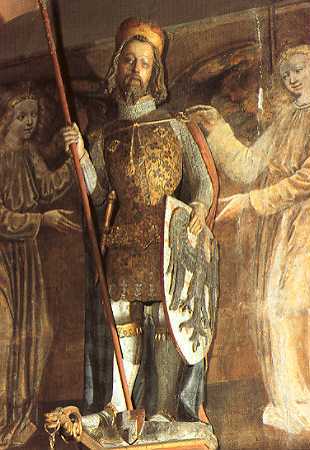
King Wenceslas (Vaclav), known from a popular carol, lived in Bohemia in 10th century. During his short life, he wanted to convert Bohemia to Christianity and that is why he was trying to spread the idea of Christian generosity. He is often portrayed as a man kindling wood, bearing toys, food, and other gifts According to a legend the king dressed in disguise happened to go to the woods in the night and chop down wood for his peasants.

Good King Wenceslas

At the age of 22, king Wenceslas was ambushed and killed by his brother Boleslav the Cruel and Boleslav's proponents. Due to his good deeds, the king was canonized and is the saint patron of Bohemia.

Statue of St. Wenceslaus / Prague


Eskimo

Eskimo Santa Claus looks Similar to American Santa, however the former one wears a furry, brown coat instead of a red one. Eskimo Santa is accompanied by Snow Baby - a blonde child dressed in a pink outfit trimmed with white fur. The baby has also toys for children - in her arms and on a sled. Both Eskimo gift givers wear snowshoes and a husky puppy is their assistant.


Estonia

In this European country Jõuluvana (a gnom-like figure) brings fruits and sweets to good kids on Christmas Eve. Jõuluvana puts the gifts into and around children's slippers or near the bed on the windowsill.

Jõuluvana


France

Aunt Airie brings presents on Christmas Eve in certain region of France. She is an old lady who travels with her donkey Marion. The donkey carries a sack full of presents for well behaved children.

Aunt Airie


Germany

In the past, Christkindl (angel-like baby) was the gift bringer in Germany. Nowadays, he is often replaced by Weihnachtsmann, a tall, slim man with a white, long beard dressed in a long, red robe. He often carries a Christmas tree which is a main symbol of Christmas in Germany. Weihnachstmann brings the presents on Christmas Eve.

Weihnachstmann

German Santa has also his assistant/servant. It is Knecht Ruprecht who helps to hand in all the gifts to good children and spanks the bad ones with a kind of rod. His face looks as if it has been darkened by ash or coal (a result of going down by chimneys), his  robe is a bit different from Santa's and not that elegant at all.

Knecht Ruprecht


Greece


On December 6, the Greek St. Nicholas arrives in a boat, dressed as a seaman. He is also the patron of the Greek sailors. He is supposed to save sinking ships that is why there are drops of sea water on his face and traces of brine on his beard. In Greece St. Nick gives children presents on New Year's Day and the holiday season ends on January 6.

Greek St. Nicholas

Nevertheless, St. Nicholas has also his part in Greek Christmas celebrations. As you can see in the picture (below) he wears different clothes then and is dressed in a long robe and a peaked hat.


Hungary

Hungarian Santa comes on December 6 with small gifts and sweets (wrapped in red paper) for children.

Hungarian Santa


Iceland

Thirteen Jolasveinar / Yule Tide Lads bring presents in Iceland (besides Santa). The merry lads live in a mountain and their names are: Woodfoot, Canalguy, Shorty, Spoonlicker, Poteater, Askalicker, Doorslammer, Cheese curds container, Sausagehooker, Windowpeaking, Smellynose, Meathooker and Candlesnatcher. Each of them brings a gift for good girls and boy - one daily, starting from December 12th.

Yule Tide Lad

The Yule Tide Lads celebrate Christmas in the lowlands and come back to their home mountain on January 6th. The number of characters is not accidental - there are thirteen Lads because, traditionally, thirteen days after Christmas the holiday season ends in Iceland.
The Yule Tide Lads are rather mischievous guys and, when they visit a home, they do what their names suggest.


Ireland

The Gaelic name for Christmas Eve is 'Night of the Cakes' and, according to Irish tradition, special fruit cakes are prepared for the day. Father Christmas brings gifts for good children on Christmas Day.

Irish Father Christmas

December 26 is the day of the Wren Boy. In the past boys spent some part of the holidays 'on the wren', seeking and hunting wrens. These days, on Dec. 26 boys dress up in colorful costumes and go from house to house (somewhat like American trick-or-treating) carrying toy wrens which are often placed on branches of holly. Some boys play instruments and sing songs.

Wren Boy

On St. Stephen's Day money for the poor is also collected (by adults of course) instead of treats.
 

Santas from all other the World - Part 2


Credits:
Pictures - Krampus and Monument of St. Wenceslaus by Peter Parlor from Wikimedia Commons 


Saturday, December 5, 2015

Santa Claus alias ?

Pytanie konkursowe, które zawarłam w poście o Świętach w Teksasie okazało się trudne. Prawdę mówiąc, sama dowiedziałam się o tym, że Santa miał jakieś inne imię dopiero mieszkając w USA. Santa to Santa. Ewentualnie Father Christmas. Tyle było mi wiadomo.

Kiedyś (już w Teksasie) przed Świętami oglądaliśmy film fabularny, z którego treści wynikało, że Mikołaj/Santa nie tylko był kiedyś małym chłopcem, ale także miał swoje imię i nazwisko. Stwierdziłam wówczas głośno coś w rodzaju: 'Pierwsze słyszę'. Mąż spojrzał na mnie ze zdziwieniem i odpowiedział: 'Wszyscy o tym wiedzą.'
Nie wszyscy, przynajmniej nie w Polsce. Nie wszyscy też wiedzą w Polsce, że Księżyc jest z sera i gdyby był bliżej to można by go zjeść.

Santa Claus znany jest w USA także jako Kris Kringle. To imię i nazwisko wywodzi się od niemieckiego wyrażenia 'Christkindl' (dzieciątko Chrystus/Chrystusowe). Christkind/Christkindl przynosi prezenty w Austrii i Niemczech. Emigranci z tych właśnie krajów przywieźli Christkindl do USA, gdzie z biegiem czasu wyraz przekształcono na Kris Kringle.

Santa, jakiego znamy dzisiaj wywodzi się obrazu, namalowanego przez amerykańskiego malarza Thomasa Nasta. Artysta, urodzony w Bawarii, spędził dzieciństwo na południu Niemiec. Co roku w czasie Świat gruby i dobroduszny mężczyzna, przebrany za Mikołaja, wręczał dzieciom (w tym małemu Nastowi) prezenty i słodycze. Takim zapamiętał go Nast i sportretował go, gdy ktoś poprosił malarza o namalowanie postaci Santa Claus. Z biegiem lat ten właśnie wizerunek Mikołaja stał się najbardziej popularnym w Stanach Zjednoczonych.

Zapraszam do odwiedzenia oficjalnej strony mikołajowej KrisKringle.com . Sporo tam różnych informacji i interaktywnych zabaw dla dzieci i nie tylko (strona w języku angielskim).


Nagrody przewidziane w moim konkursie świątecznym rozlosuję wsród osób, które w komentarzach do tego postu odpowiedzą na pytanie: Jaki prezent świąteczny z lat dzieciństwa zapadł Wam w pamięci?

Jeśli  macie ochotę otrzymać jeden z trzech drobnych upominków, zapraszam do komentowania (do 8 grudnia włącznie). :)


Zdjęcie Mikołaja: Jonathan G Meath (Jonathan G Meath) [CC BY-SA 2.5 (http://creativecommons.org/licenses/by-sa/2.5)], via Wikimedia Commons